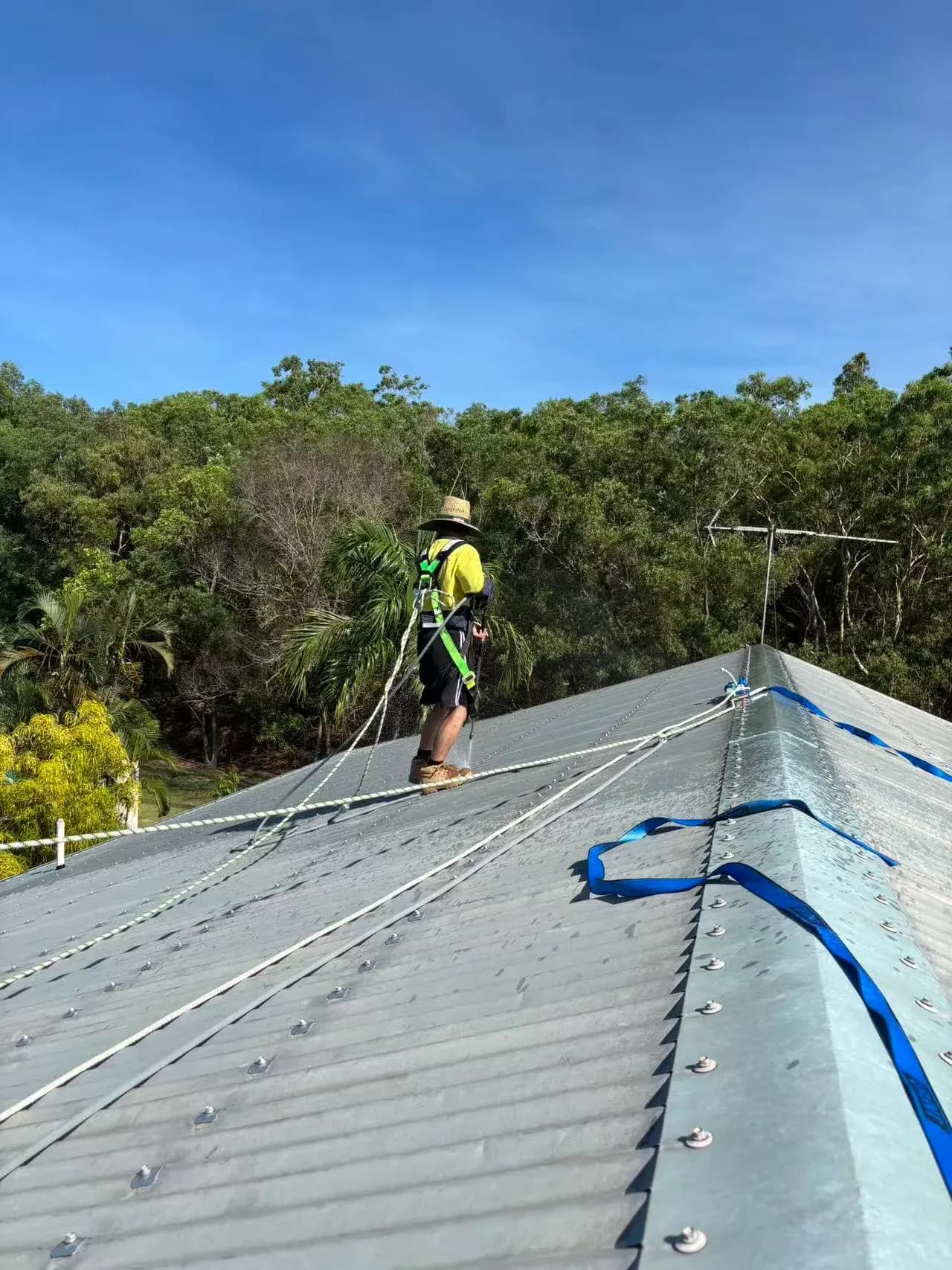
Before the wet season, visible roof and internal signs can be documented so a maintenance enquiry starts with useful information. This is not a substitute for safe inspection by an appropriate person. Do not climb onto a roof or enter an unsafe area simply to take photos.
Check safely from accessible areas
From the ground or another safe location, look for visible rust, loose material, damaged flashing, blocked drainage points or areas where water appears to collect. Inside the building, note water marks, peeling finishes, damp areas and the room or ceiling location where they appear. Record whether the issue is new, recurring or linked to a recent weather event.
Common signs to document
- Water marks on ceilings or internal walls.
- Rust, loose fixings or worn roof coating.
- Blocked gutters or areas where water does not drain properly.
- Previous repair areas that have started leaking again.
- The approximate location of the internal sign in relation to the roof.
- Any safe-to-view damage around penetrations, edges or adjoining structures.
Prepare a useful first message
Include the suburb or postcode, building type, the areas affected and when the sign was first noticed. If water is currently entering the building or electrical equipment may be affected, say so clearly and take appropriate immediate safety action. The website does not diagnose the source of a leak or confirm an emergency response.
What AUHUA needs to confirm
Photos can help identify the general maintenance direction, but the cause, safe access method and repair scope may require site review. Materials, price, timing and any additional trade requirements must be confirmed separately.
Roof and building-maintenance enquiries sit within Renovation & Property Improvement. Use that service page to review the scope before sending the available information.